
Introducting A New Series About Rembrandt and The Night Watch
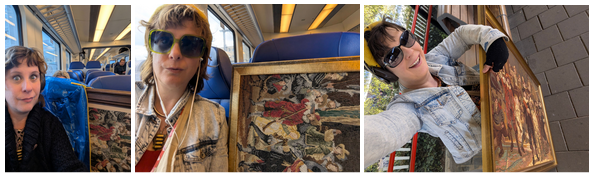
For the last couple months, I’ve been traveling around North and South Holland collecting vintage cross stitches off Markplaats (essentially, the Dutch Craigslist). Specifically, cross stitches of paintings by the old Dutch Masters. I’ve bought some super cute, aesthetic Vermeers, but mainly I’ve been buying different takes on Rembrandt’s iconic painting The Night Watch.
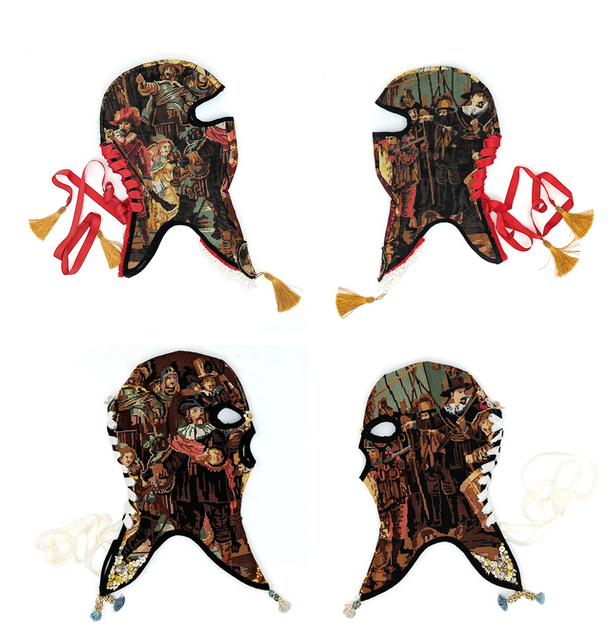
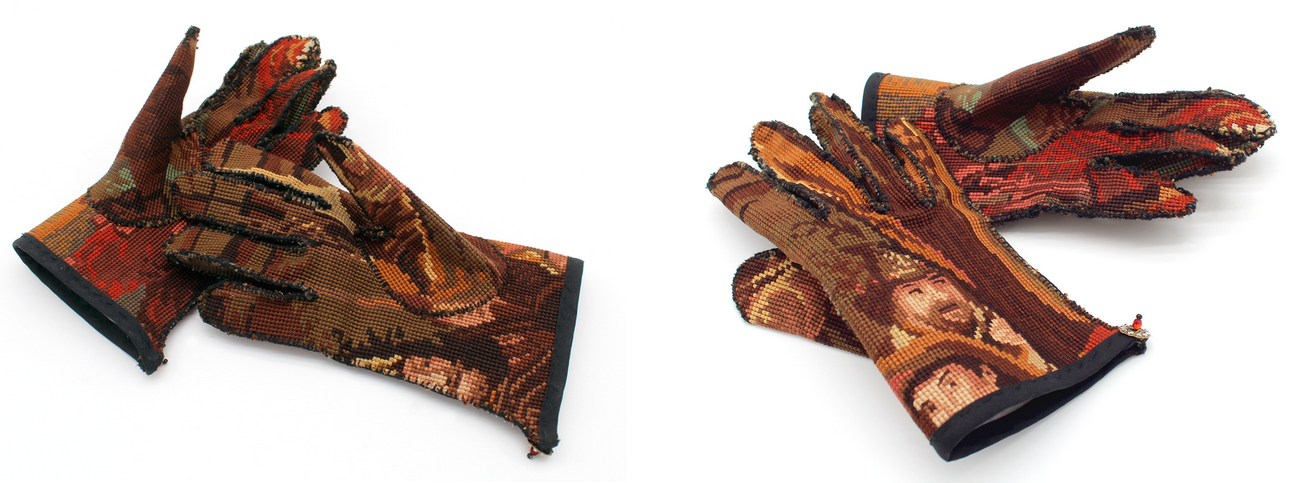
Now, I love cross stitches as folk art objects, but I also love them as a raw material. Cross stitches make wonderful elements in soft sculptures and mixed media textile pieces. Something about their almost pixel-art quality is so graphic and easy to work with. So I’ve been taking all these cross stitches, cutting them up, and sewing them into soft(ish) sculptures – specifically, into sculptures of common burglary tools.
Right now I have two balaclavas modeled after the two central figures in The Night Watch, a pair of work gloves, and a hacksaw; but there are about a dozen other elements in the works.
So why burglary tools, and why The Night Watch?
The Night Watch was a commission painted in 1642 by the Dutch master Rembrandt van Rijn. It depicts Amsterdam’s Militia Company of District II as they are about to go on duty patrolling the city. These militias, or schutterij, were voluntary civil guards made of influential city elites and were intended as supplemental military support, helping protect the city in case of attack, revolt, or fire. Now, The Night Watch was painted in the last years of the Eighty Years War, when the revolt was no longer directly impacting Amsterdam. Which is right around the point where the militias transitioned into purely social, fraternal orders of rich dudes – basically drinking clubs with fancy uniforms and weapons.
So in this painting they are pantomiming safety and security and order. There are no Spanish troops to fight, but they’re going through the symbolic motions as if there are. And me? I am pantomiming danger, violence, and chaos while wearing the guise of all those noble aims.
If you remember, earlier this year I finished a three-part series about a different Rembrandt painting – The Storm On The Sea Of Galilee – that focused on its theft and how the loss of the painting has been emotionally navigated after the fact. This new series is essentially its more nihilistic spiritual twin. Where The Storm On The Sea Of Galilee was about handling loss, this Night Watch series is more about the futility of fighting against it.
The Night Watch cannot protect you, because the Night Watch is theater. Theater with loaded muskets perhaps, but theater nonetheless. In the end, chaos will exploit that weak spot, that belief that someone is coming to save you, while robbing you of everything you care about.
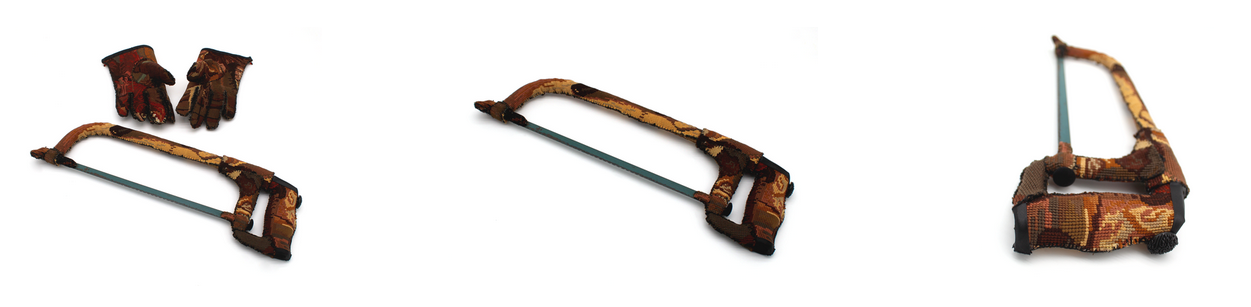
At least, that’s where the series stands right now…
This series is so new it doesn’t even have a name yet, so some aspects of the tone may mellow over time. But since I’ve been sharing elements of it on Instagram and TikTok already, I thought it was time to start sharing the context. I’ll post more updates as I build more of the burglary tools and start piecing together the larger installation.
Tell me, dear readers – what burglary tools should I make next?
