
The Storm On The Sea Of Galilee -- Parts 2 and 3
"The people that took these paintings don't have them hidden in some private art gallery, sitting back and just reveling in their beauty. These paintings are most likely up in an attic somewhere, or in a basement, not being viewed by anyone." – FBI Special Agent Geoff Kelly
I want to introduce you to the second and third pieces in my series on Rembrant’s lost painting The Storm On The Sea Of Galilee.
The first piece in the series, which I introduced you to in 2025, was about how we navigate loss. It focused on the after effects of the 1990 theft and how the Isabella Stewart Gardner Museum responded to it in their curatorial decisions. The second and third pieces are about the inescapable grief of that loss. They focus on how this grief avoids easy resolution due to the lack of closure around the theft. Are the paintings still out there? Still findable? Still saveable? These questions remain tantalizingly unanswerable.
These differing responses/viewpoints to loss are reflected in the materials used. In the first piece, the dominant material is string. And what does string do? It binds, it connects, it fixes, it secures. Here, string represents an attempt to heal the loss. To recreate the painting in the language of repair. In the second and third pieces, the dominant material is cardboard poster tubes. Which may be an unexpected material for Big Serious Art about Big Serious Art, but works within the context of the painting’s lore. For whereas the symbolism of string casts a wide net, the poster tubes are a laser-focused metaphor for the loss and assumed destruction of this one specific painting.
Before I contextualize this metaphor, I’m going to recommend the Netflix documentary This Is a Robbery: The World's Biggest Art Heist which goes into a variety of theories and leads about the fate of The Storm On The Sea Of Galilee. I am going to focus on only one of these theories – the theory that the painting has spent 36 years rolled up in a tube and has been destroyed due to neglect.
We know for a fact that The Storm On The Sea Of Galilee was cut from its stretcher and rolled up during the course of the initial theft. Measuring 5 feet high and 4 feet wide, it was the largest of the thirteen stolen works. Presumably far too large to be stealthily fit into the getaway vehicle.
So the question is not whether the painting was rolled up, but whether it was ever unrolled.
While we do not have a definitive answer to this question, we have had hints. In 1997, the investigative reporter Tom Mashberg claimed he’d been shown The Storm On The Sea Of Galilee by a source. They’d taken him to a warehouse where the painting was partially removed from a large poster tube and shown to him with a flashlight. He said the size and the knife damage to the edges looked correct; but he was only shown a small portion, it was a very quick viewing, the light was very low, and he was not shown any of the other missing art pieces.
If Tom Mashberg was shown the actual, real The Storm On The Sea of Galilee, at that point it had already spent seven years rolled up in a tube. He even stated that it was visibly damaged, with the paint starting to crack and flake. Unless a buyer (and an art restorer) were secured soon after this, it seems unlikely the thieves would have gone through the effort of restretching the canvas. Which means if it does still exist, it’s probably still in that tube, with nineteen additional years of damage wrought upon the paint.
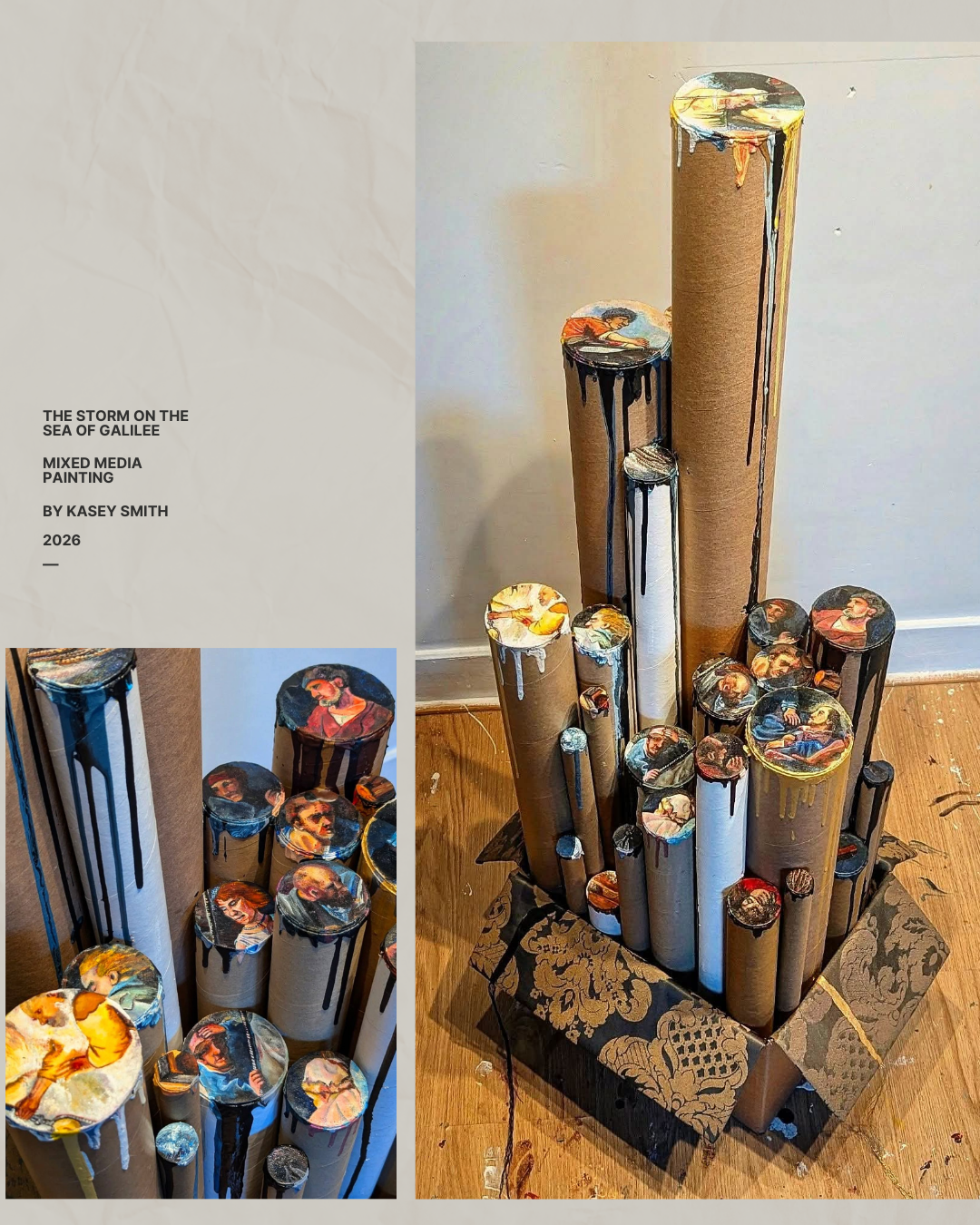
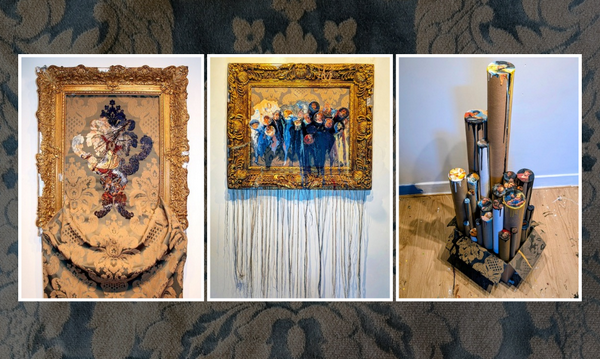
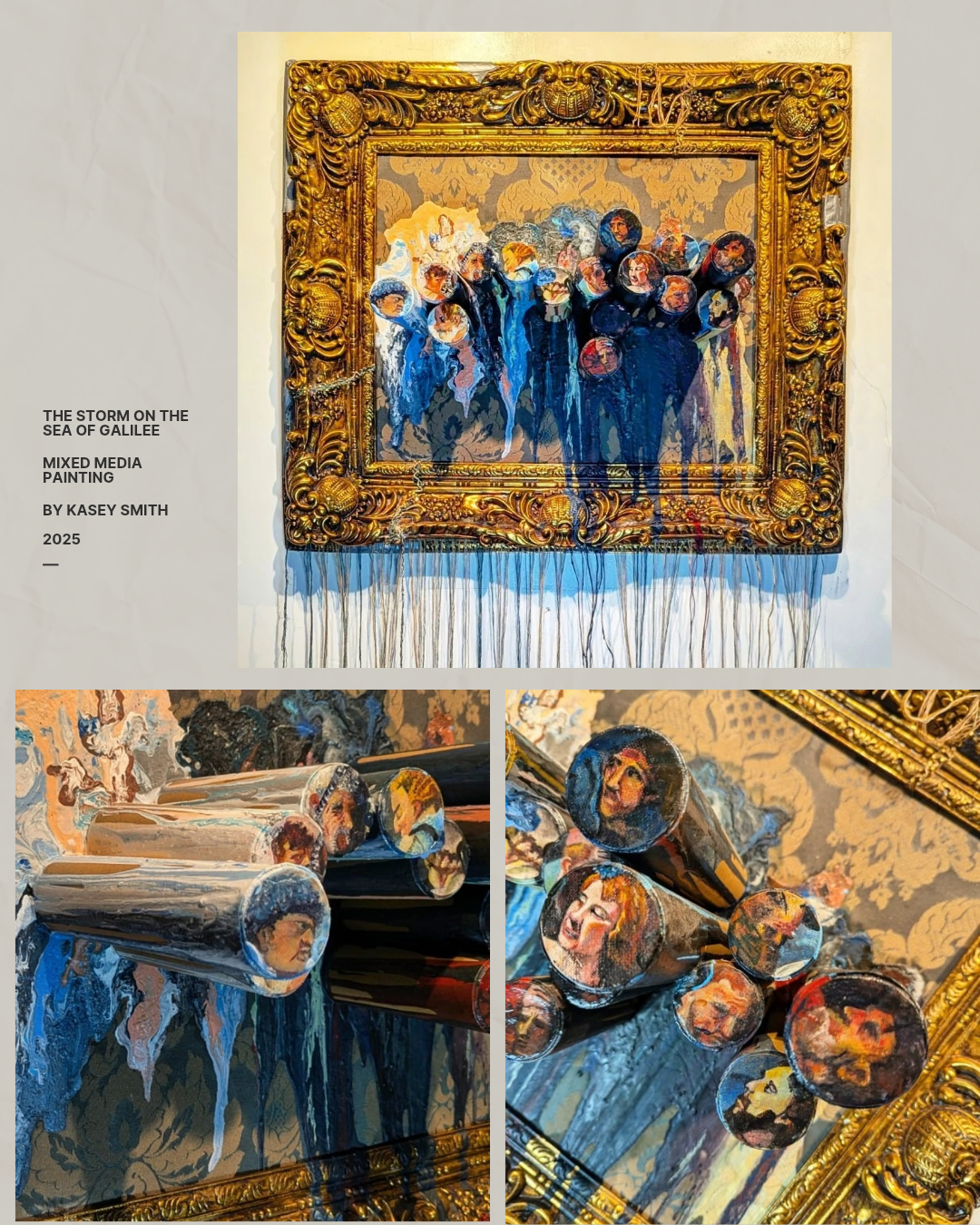
The poster tubes are thus a metaphor for the senseless destruction of The Storm On The Sea Of Galilee during the aftermath of the Isabella Stewart Gardner Museum heist. In these two pieces – a wall piece and a floor piece – the figures in The Storm On The Sea of Galilee have been broken up and painted across a collection of poster tubes. The paint drips off these paintings as if it’s dissolving – flowing down the tubes, across the damask, off the edges of the frame and box, and along the frayed strings hanging off them. The works present The Storm On The Sea Of Galilee as fragmented and disintegrating. The paint drips, the damask unravels, the frame cracks, the box creases. String and tape and nails struggle to keep things whole but are defeated. This is something whose integrity has been broken, something in the process of becoming undone.
Much like a four hundred year old oil painting that has spent thirty-six years in a poster tube.
When faced with the vicious stupidity and senseless loss of The Storm On The Sea Of Galilee, sometimes all we can do is just sit with our grief. This was the mindless, pointless destruction of something beautiful. One of the greatest paintings in Dutch art history rotting away in storage because someone cared enough to steal it, but not enough to protect it afterwards. The cultural loss is incalculable, in part because the act itself is so inconceivable. We want there to be a why, but neither the universe nor the FBI has been able to provide one. Seemingly stolen for nothing and destroyed for nothing, we are left with this final nothingness to contend with – the nothingness of an unknowable answer to the painting's fate.
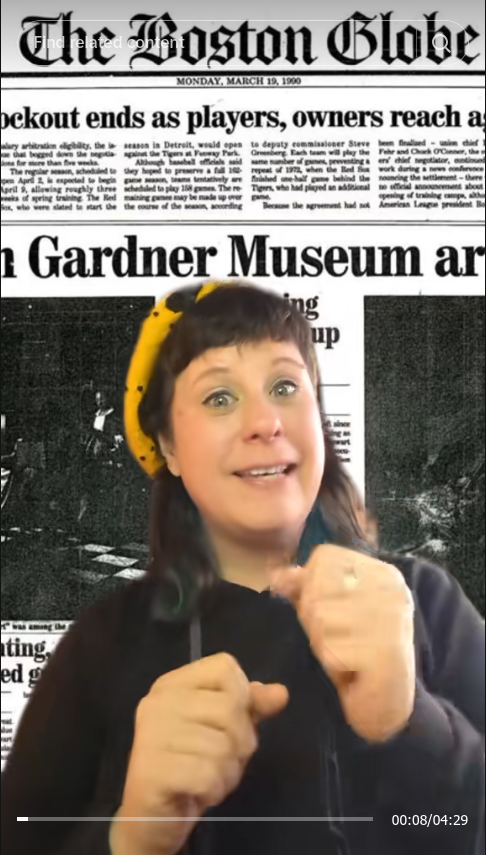
@kaseysmithdesigns Why I used poster tubes to recreate Rembrandt's The Storm On The Sea Of Galilee. #artistsoftiktok #rembrandt #isabellastewartgardnermuseum ♬ original sound - Kasey Smith
