You’d think that I’d be gung-ho about Friday The Thirteenth tattoos. Spooky flash! Cheap ink! Bad ideas! But I’ve always wanted something a little more… esoteric? intellectual?... from my tattoo event experience. And that is simply not what impulsively silly little Friday the Thirteenth tattoos are about.
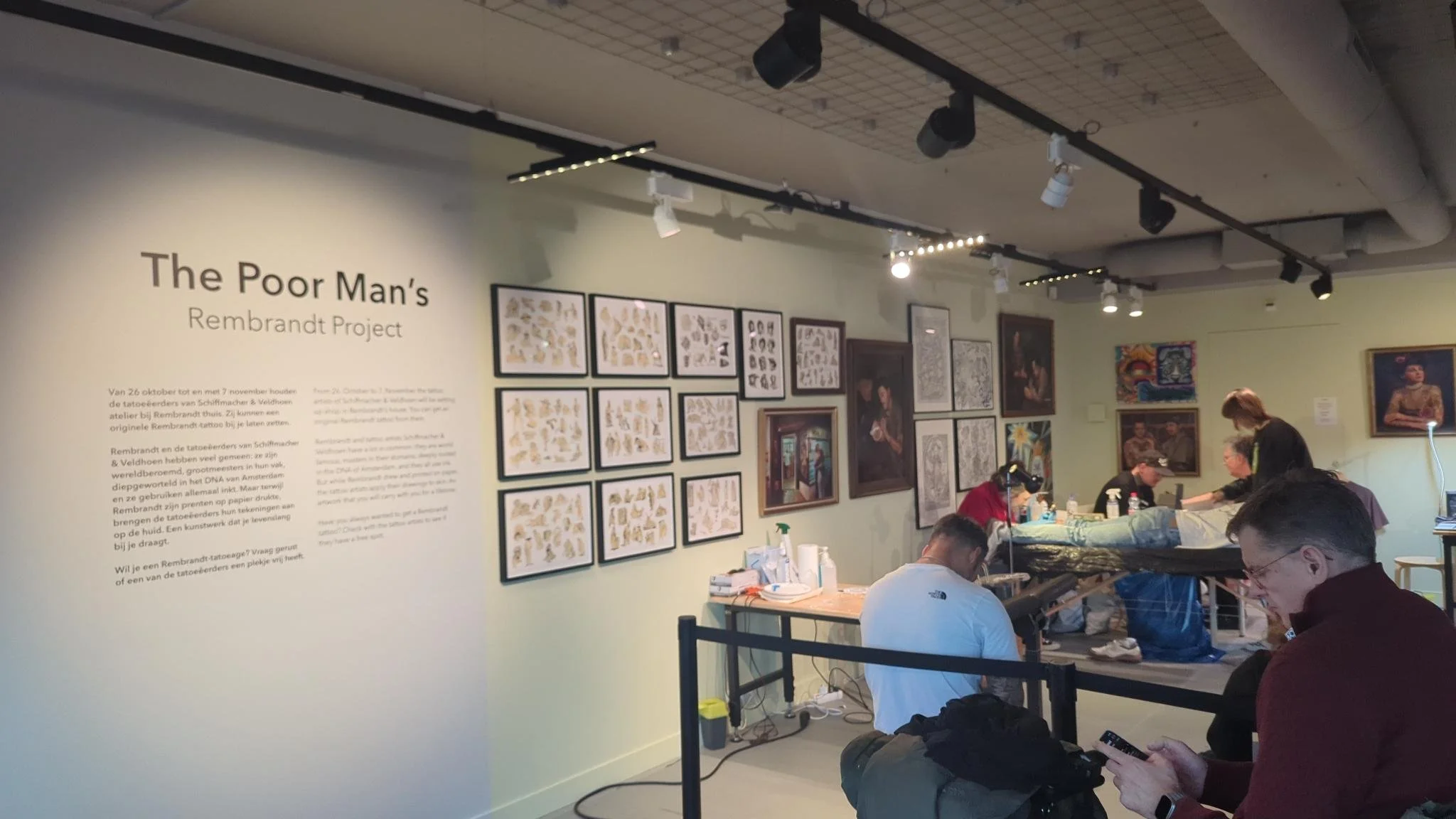
But then I moved to the Netherlands, where the Rembrandthuis Museum has been hosting a Rembrandt tattoo event every fall for the last three years. Called the Poor Man’s Rembrandt Project, it roughly follows the traditional Friday The Thirteenth format; except the tattoos are a little bit bigger, a little more expensive, and take place in the top floor of a museum. Oh, and they’re all based on either Rembrandt’s self-portraits, his signature, or his sketches.
This is basically Kasey Catnip, especially if we’ve ever discussed my tattoos and how I’ve worked nods to the TifFAUXny Snail and FAUXberge Egg projects into my ink. So as soon as signups went live I went through the flash, paid my deposit, and made an appointment with Morrison Schiffmacher for October 30th – a little pre-Halloween present to myself.
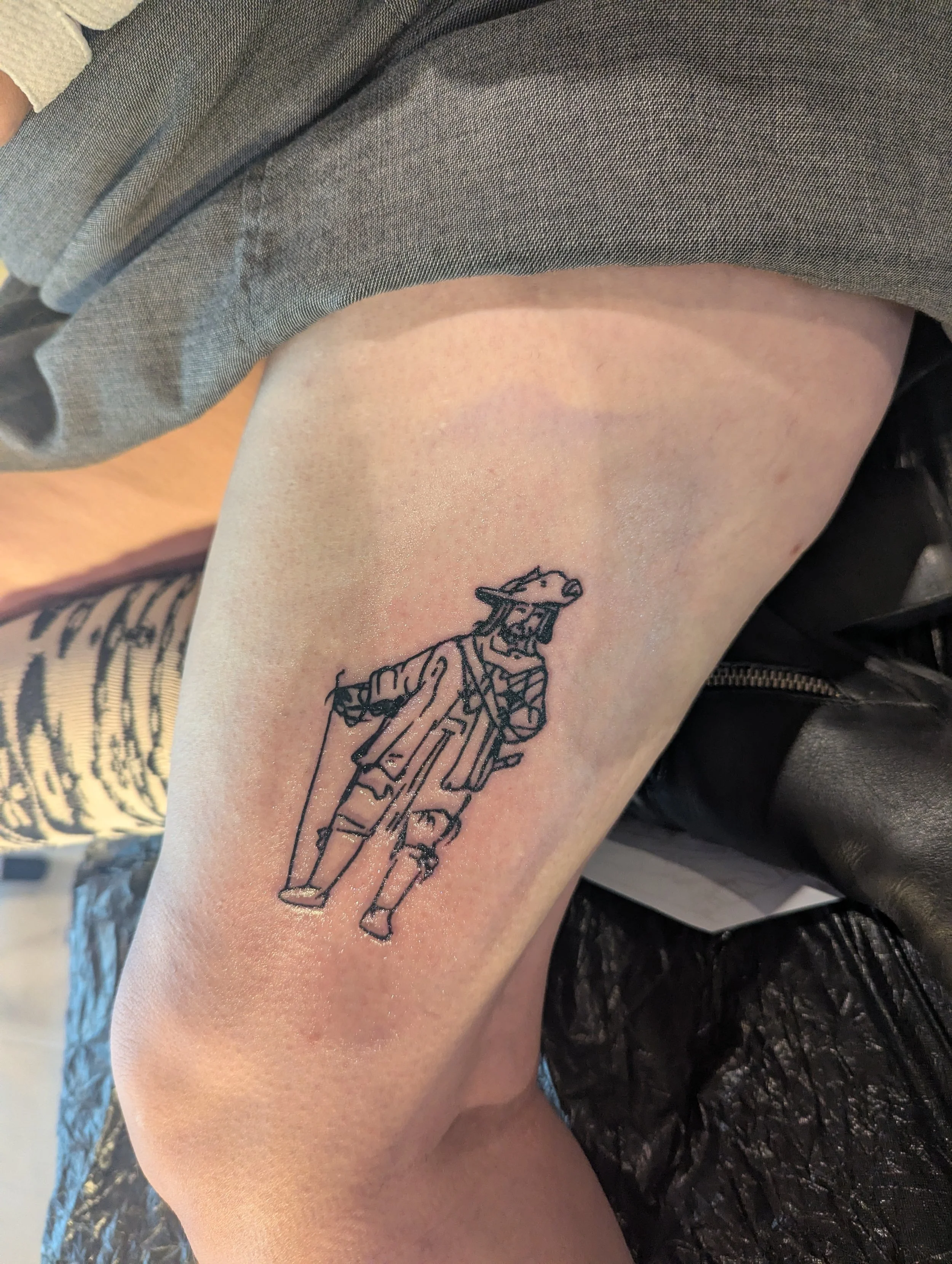
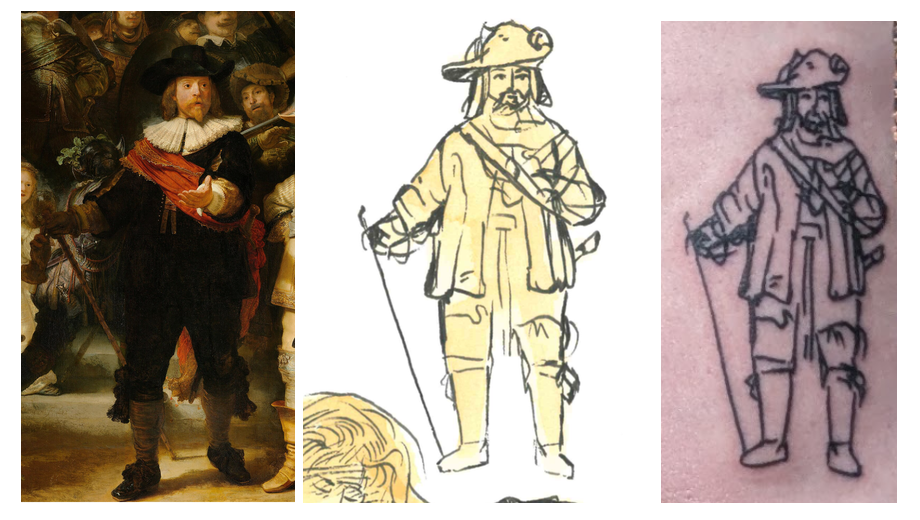
While I briefly entertained getting his signature as a tramp stamp, perhaps unsurprisingly I went with a tattoo inspired by my own Rembrandt homages – a jaunty little line sketch inspired by Captain Frans Banninck Cocq above my left knee.
He’s currently pretty itchy! But I love how he peeks over the top of my tall socks and how he celebrates my artistic journey in the Netherlands and this beast of a series (the Night Watch Burglary Tools) which I am currently in the middle of pitching to various art organizations in North Holland. Keep your fingers crossed for me on that front. I could really use it.
After getting the tattoo done I was awash in endorphins and happy new ink feelings and decided to take the long way down to the museum entrance; walking through two floors of rotating exhibits instead of just taking the elevator. If you’ve never been to the Rembrandthuis, this part of the museum is pretty compact and the exhibits in it are on the smaller side. I wasn’t expecting much, I was mainly just trying to walk off the post-tattoo rush before heading back to the train station.
But museums have a funny way of defying expectations. And so mine were that afternoon because I accidentally found the inspiration for my next art piece – The Anatomy Lesson of Dr Deijman.
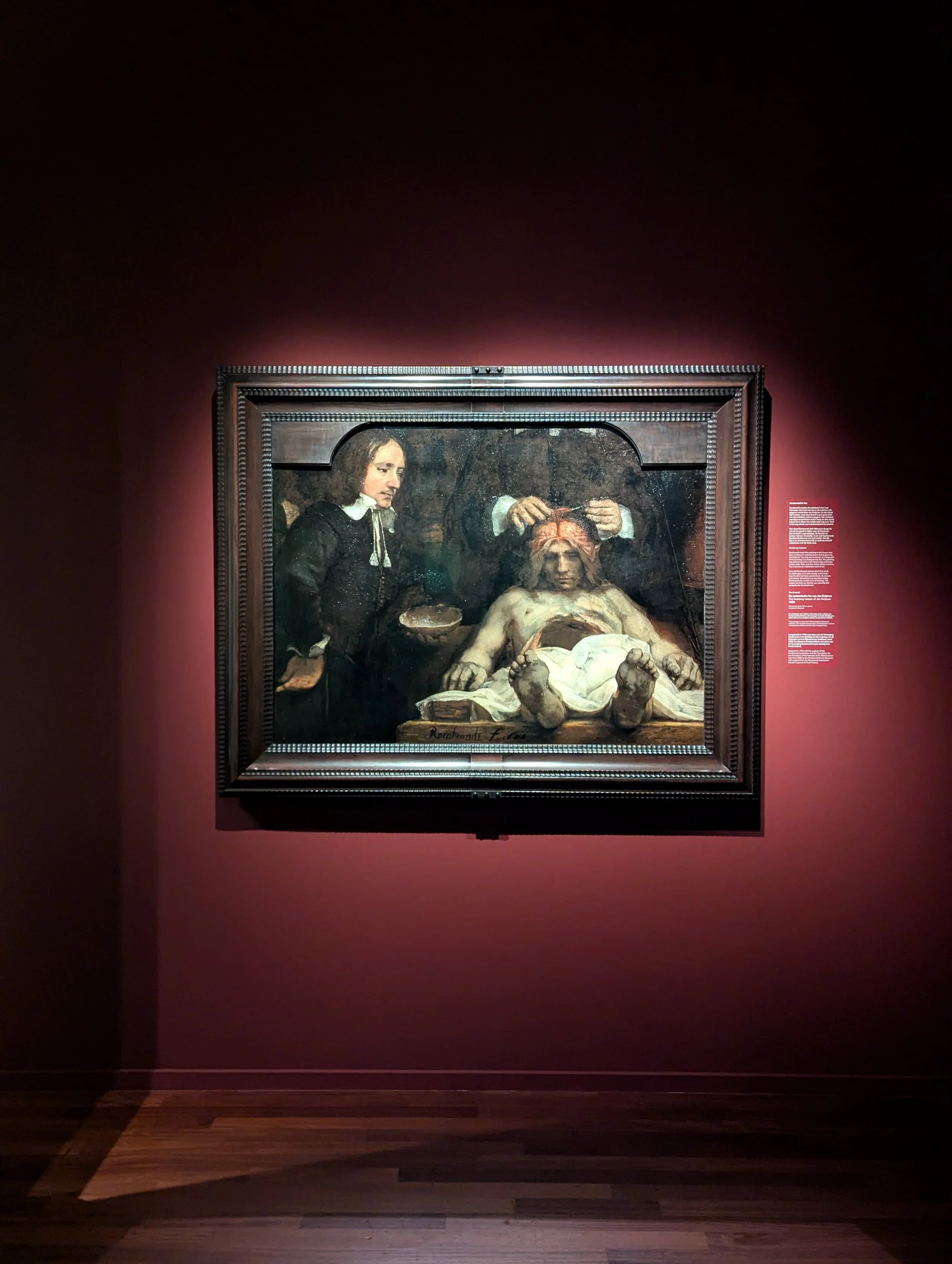
Now, I’ve seen The Anatomy Lesson of Dr. Nicolaes Tulp at the Mauritshuis twice. It’s a spectacular Rembrandt, but it never really tugged at my heart strings nor captured my imagination. And until that day in the Rembrandthuis, I never knew that Rembrandt had painted a second anatomy lesson; nor that it was larger, more detailed, and more of a showcase of his skills than his painting of Dr Tulp.
And there is probably a good reason for that – because in a 1723 fire, 4/5ths of The Anatomy Lesson of Dr Deijman was burnt, leaving only Dr Deijman’s hands, his assistant, and the corpse intact. This is of course a radical change in the composition and emotional tone of the piece. What was a professional group portrait of nine surgeons performing an anatomical demonstration has been reduced to mere anatomy. To the corpse with his cavernous torso, his greying limbs, and his flayed brain; to the assistant with the skullcap in hand, to the surgeon’s fingers paused in the act of unraveling the falx cerebri. All that professionalism and guilded heraldry reduced to the most base denominator of flesh. Like if Mary Shelley were writing LinkedIn posts.
And unlike The Storm On The Sea Of Galilee or the lost strips of The Night Watch, we don’t truly know what was lost to this particular fire. Unlike with those paintings, there were no photographs nor detailed reproductions to memento memorialize The Anatomy Lesson of Dr Deijman. We only have the barest of preparatory sketches – what essentially amounts to a back-of-the-napkin doodle – made by Rembrandt during the painting’s framing process.
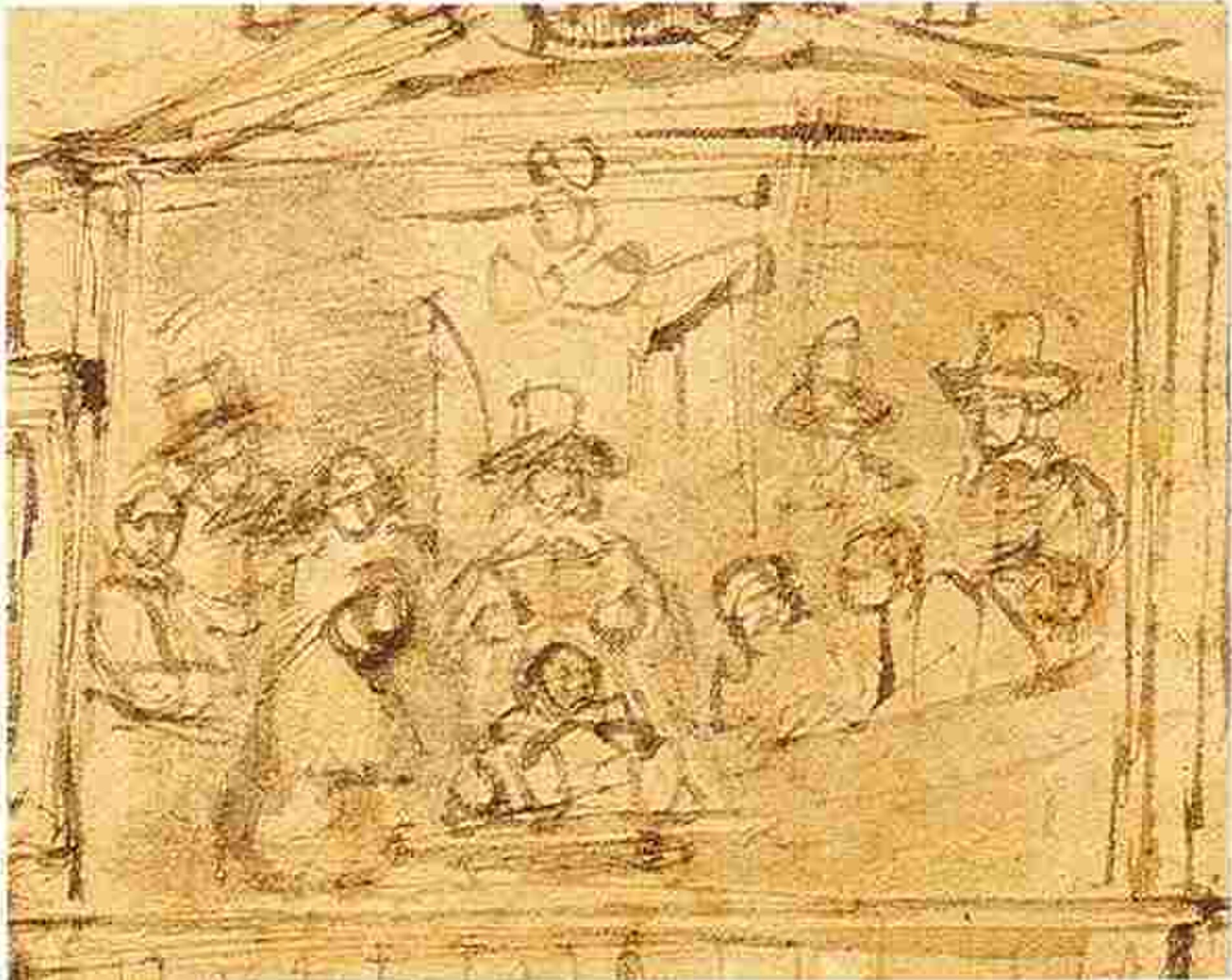
And I have been mulling this over in my mind all weekend. You cannot truly grieve what you never cared for or knew. And so the grief that settles onto our mental model of The Storm On The Sea Of Galilee or, to a lesser degree, The Night Watch, finds no foothold on The Anatomy Lesson of Dr Deijman. There is a slipperiness to it, like fresh blood before it’s gotten a chance to become sticky. While we can appreciate the loss intellectually, deeper emotional levels of grief are more inaccessible. There is nothing for them to attach to and so our response remains all brain and no heart – much like the remaining painting itself. But is there a threshold for knowing? For grieving? If Dr Deijman was more than mere hands, if one or two of the other surgeons had been saved, would that have altered our relationship to this painting and its loss? Made it feel more knowable, more real, and hence more mournable?
***
I’m not entirely sure where this piece is going to go but I like the triptych it could potentially help me complete – a painting lost to theft (The Storm On The Sea Of Galillee), a painting lost to carelessness (the lost edges of The Night Watch) and a painting lost to disaster (the burnt sections of The Anatomy Lesson of Dr Deijman). I’m sure it will contain themes of mourning the unknown or trying to recreate the unknown. And I’m sure it will somehow relate to fire and blood. Perhaps this is where I revert to my old art school ways and make something abject… Only time will tell…
But in the meantime, I have a frickin’ sweet tatto