
The Lost Vermeer
A companion piece to The Storm On The Sea Of Galilee by Kasey Smith
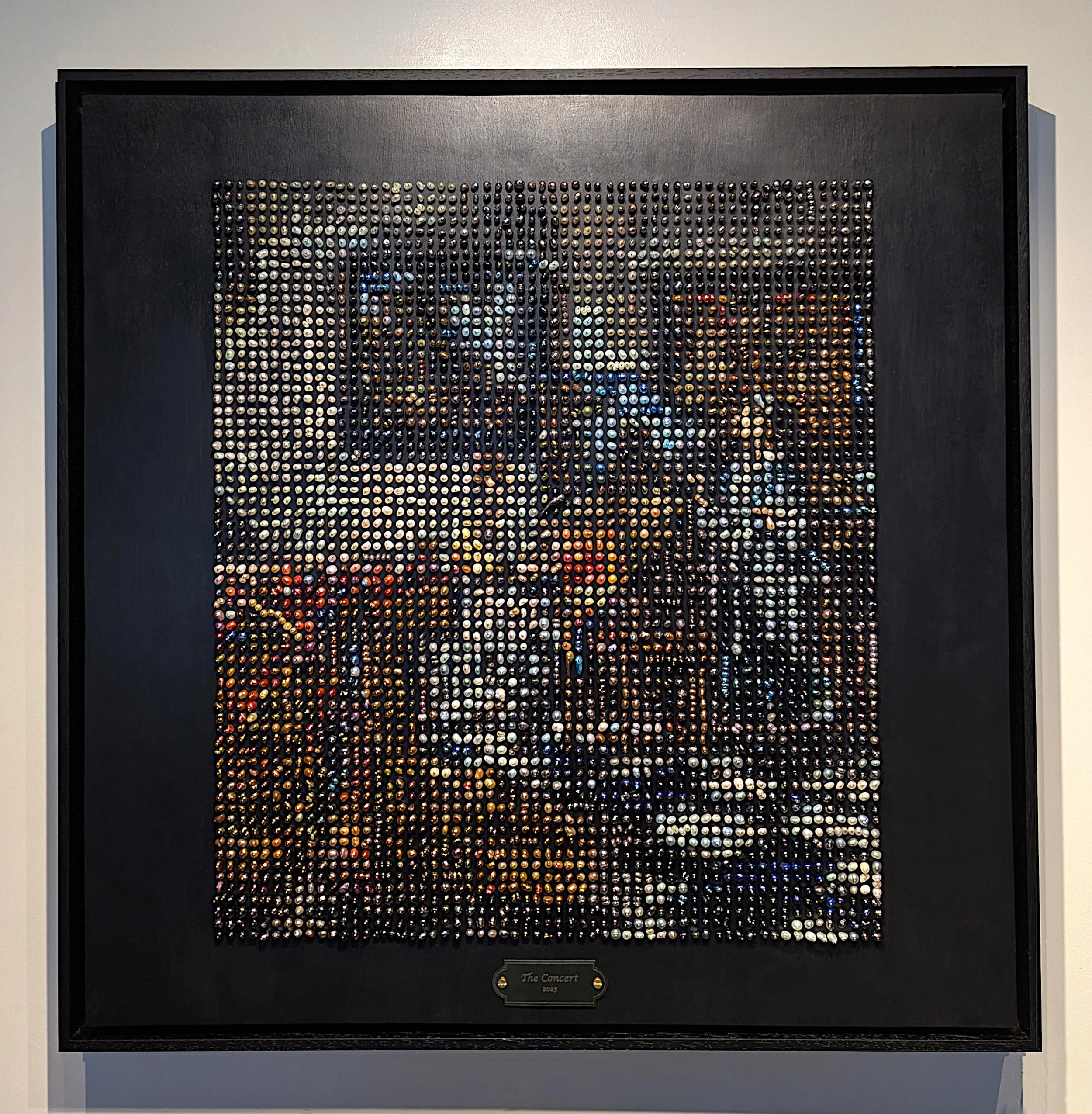


Vermeer was at best a part time painter, juggling a failing business and eleven children with his more famous creative exploits. Hiding in his attic to paint, it’s thought that in those stolen moments he eked out around fifty pieces, of which thirty-four still existed on March 18, 1990. And thanks to one very mysterious, and likely very bungled, art theft that day, the number of surviving Vermeers has now dropped to a paltry thirty-three.
Or so some experts think. No one really knows what happened at the Isabella Stewart Gardner Museum that day, nor what happened to The Concert after it was ripped off the walls of the Dutch Room. Does it grace some oligarch’s bedroom? Is it squirreled away in a vault or a storage locker? Was it tossed in the trash when the cops got too close or the buyer backed out? It’s sad to think of The Concert sleeping with the fishes in Boston Harbor, but thirty-five years on, it’s unfortunately the most likely scenario.
Great art rarely dies. Not anymore at least. From climate controlled rooms to protective glass to specially calibrated lighting to modern conservation methods there exists an entire industry designed to extend the life of these works. Sure, the Amber Room, more than a few Klimts, and several paintings by fellow Dutchies Van Gogh and Rembrandt Van Rijn were destroyed during WWII (not to mention all the pieces looted from their Jewish owners and never returned). And there was also the looting of the Iraqi Museum and the destruction of the Bamiyan Buddhas in Afghanistan. But outside of such wartime tragedies it’s rare to lose such a famous piece so late into the 20th century.
But we did.

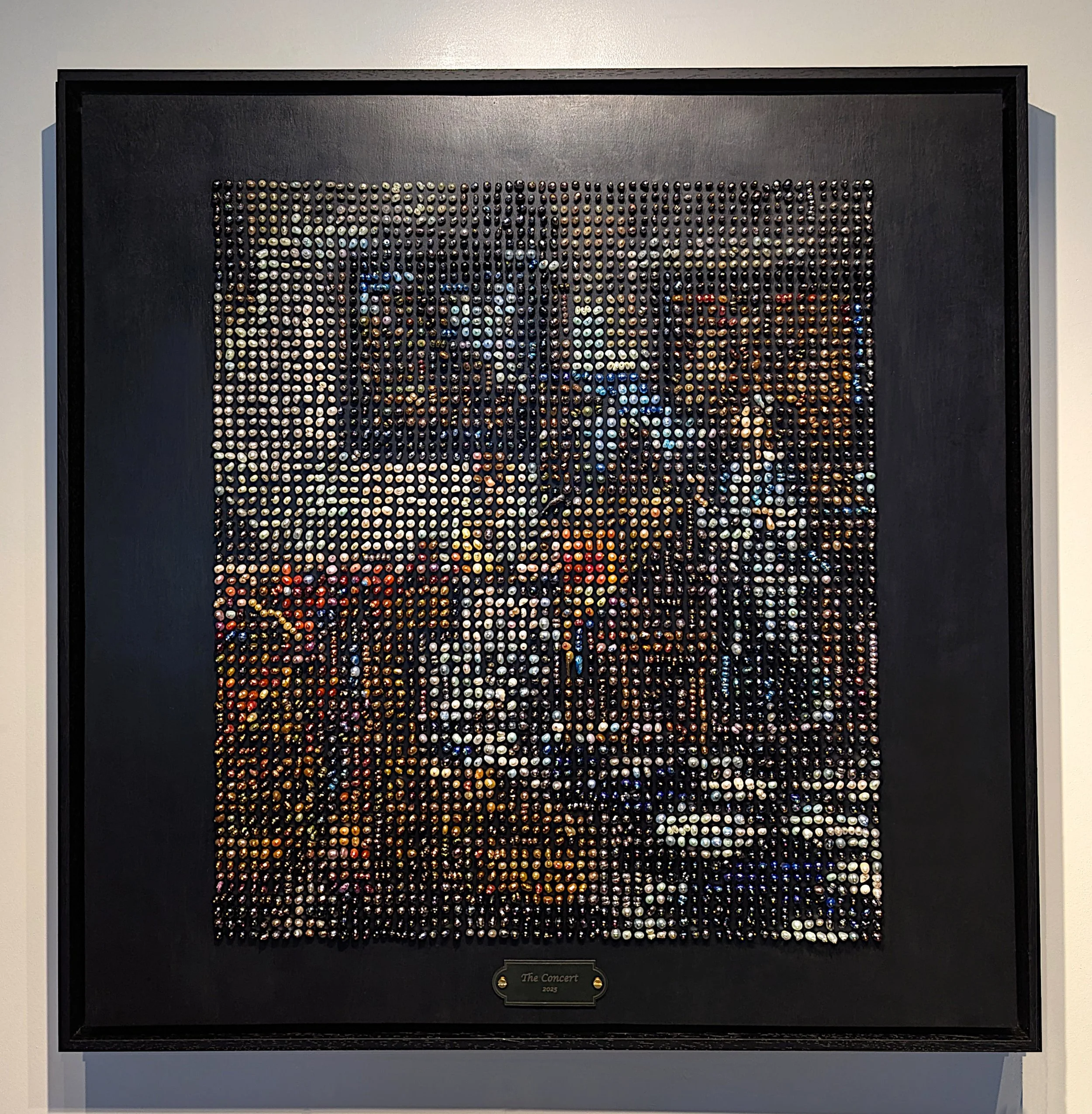

The Concert now lives only in its documentation; like a sad and beautiful ghost haunting the digital halls of articles on the theft. Or, if you’re feeling less charitable, like a zombie shambling across them in mockery of the vibrant life that was. We do have stunning reproductions of the piece — far better than technologies allowed for those lost during WWII — but there is a limitation to what high res images and screens can convey.
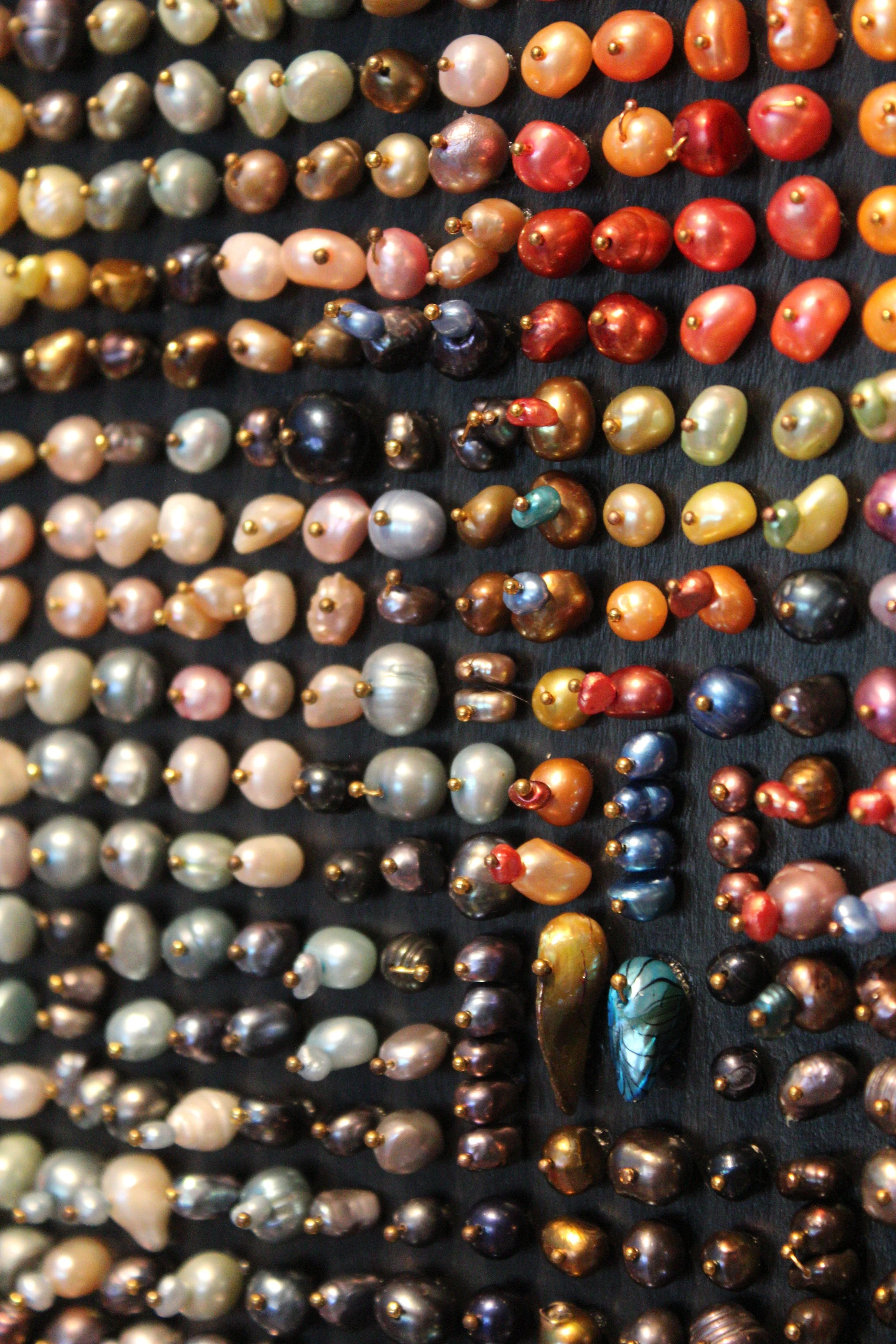
By re-imagining The Concert using freshwater pearls I have snatched it from this digital afterlife and returned it to corporeal form — albeit a form that’s been intrinsically altered by thirty-five years in cyberspace. This is the apex of the Pixelated Pearl Vermeer series. Across this body of works I’ve been mining the interplay between art and its reproductions, focusing on the parallels between the camera obscura and modern digital editing tools.
“A three-dimensional subject rendered flat by the lens and then reinterpreted a second, equally flat time by brush and paint. My process continues that chain of dimensional custody, but inverts it at the last step. Tripping through a cascade of 2D renditions, only to thrust the subject back into the 3D world at the very end.” - The Pearl and the Pixel
But The Concert is now all reproduction and no art, which throws a wrench into the progression of toolings and dimensions I discuss in the quoted blog post above. It means something different when a Vermeer that only exists as pixels on a screen is returned to the world of objects, when its new form continues to reflect its (after)life on the screen. The work of art in the age of digital immortality…
Neither we nor The Concert can escape the reality of its theft. There is no going back. There is no denying that thirty-five years ago the painting was lost, reduced to a mere digital image. Squares on a screen or pearls on a canvas are both discrete addressable elements. Visual building blocks that approximate the light, color, composition, and form of Vermeer’s work. But they are not that Vermeer work.
“This is not the greatest song in the world, no
This is just a tribute”