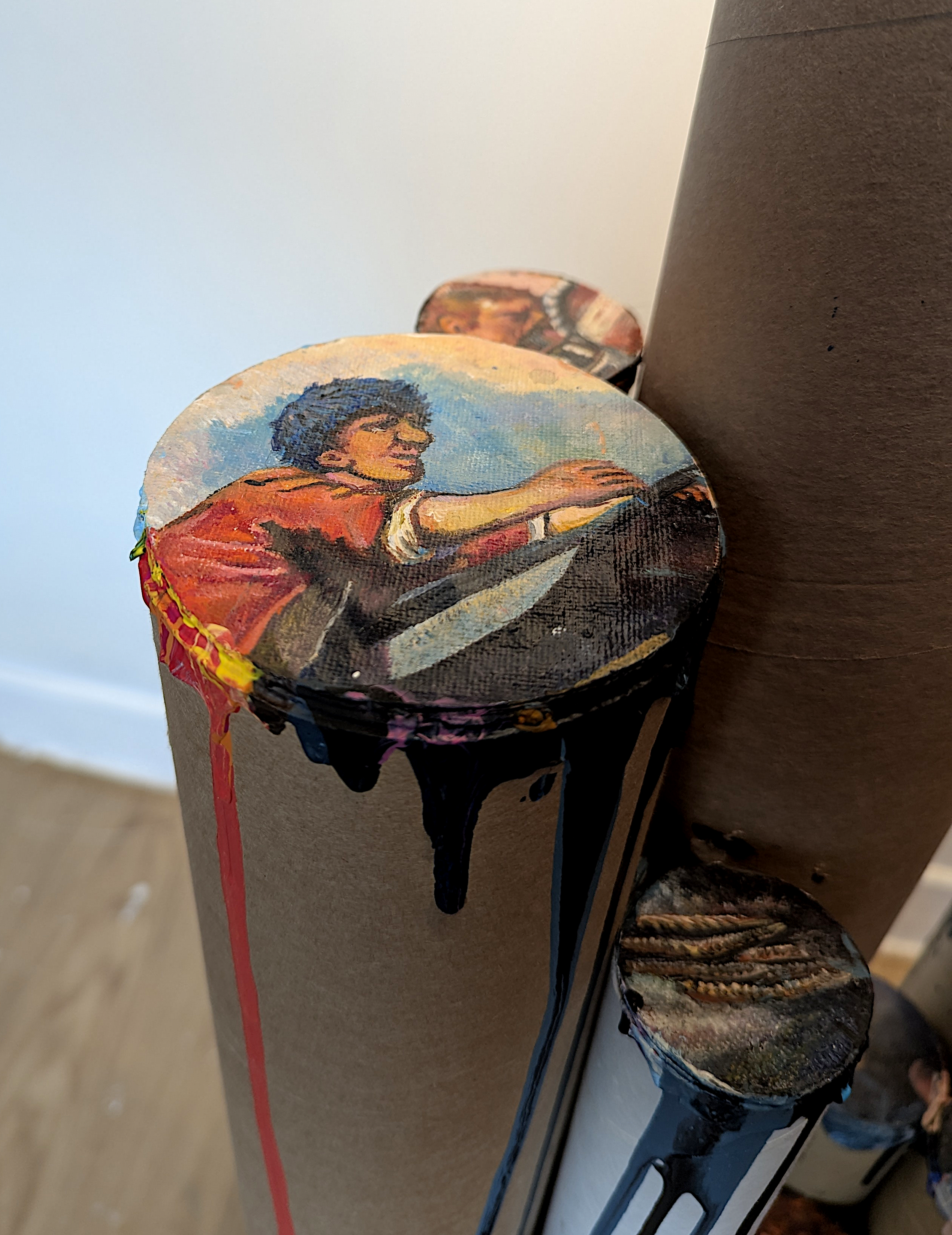
The Storm On The Sea Of Galilee Parts 2 and 3
Two-part installation exploring the fate of the stolen Rembrandt by Kasey Smith
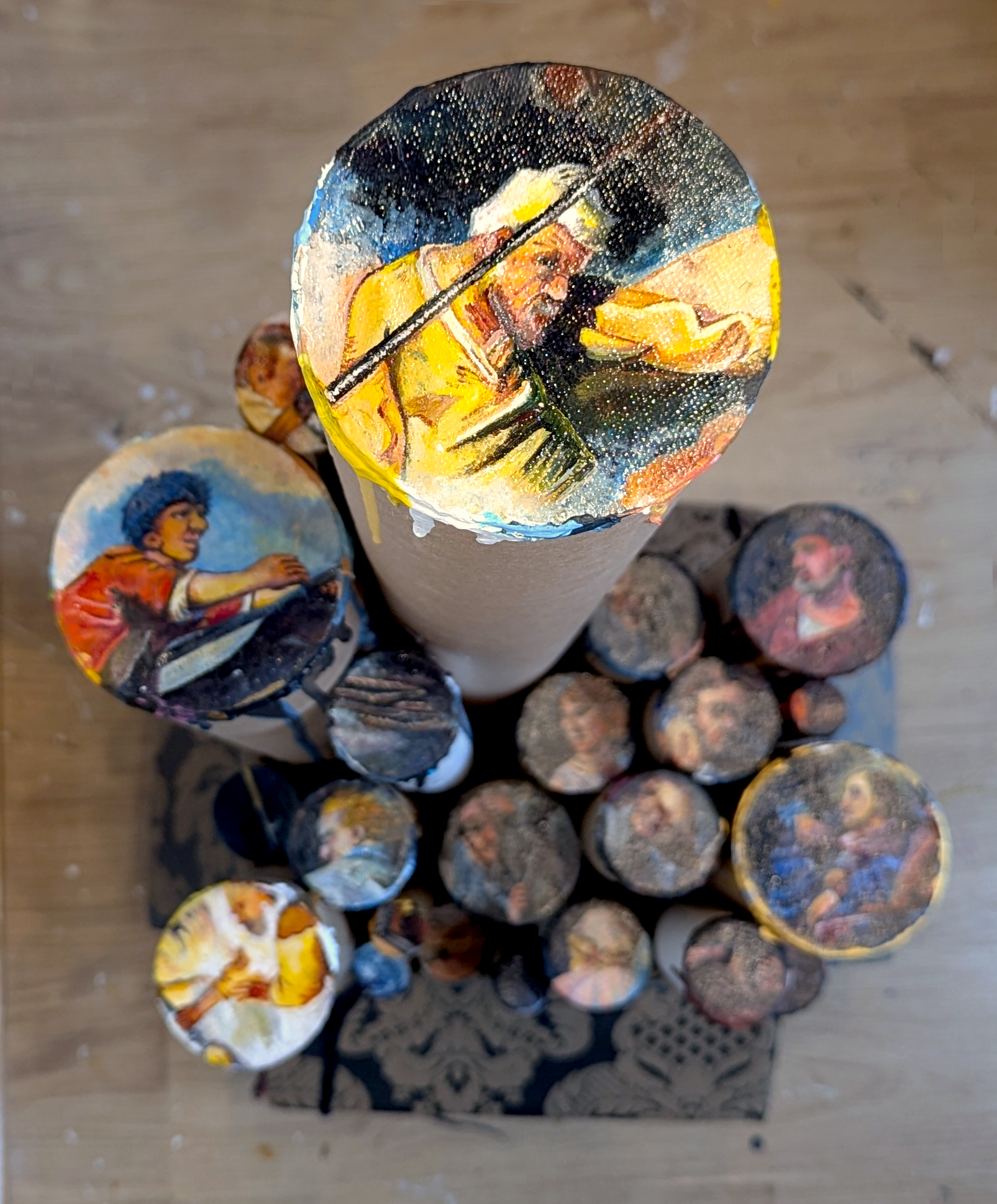
"The people that took these paintings don't have them hidden in some private art gallery, sitting back and just reveling in their beauty. These paintings are most likely up in an attic somewhere, or in a basement, not being viewed by anyone." – FBI Special Agent Geoff Kelly
The first piece in the Storm On The Sea Of Galilee series was about how we navigate loss. It focused on the after effects of the painting’s 1990 theft and how the Isabella Stewart Gardner Museum responded to it in their curatorial decisions. The second and third pieces are about how the inescapable grief of that loss settles in over time; the lack of closure around the theft avoiding an easy emotional resolution.
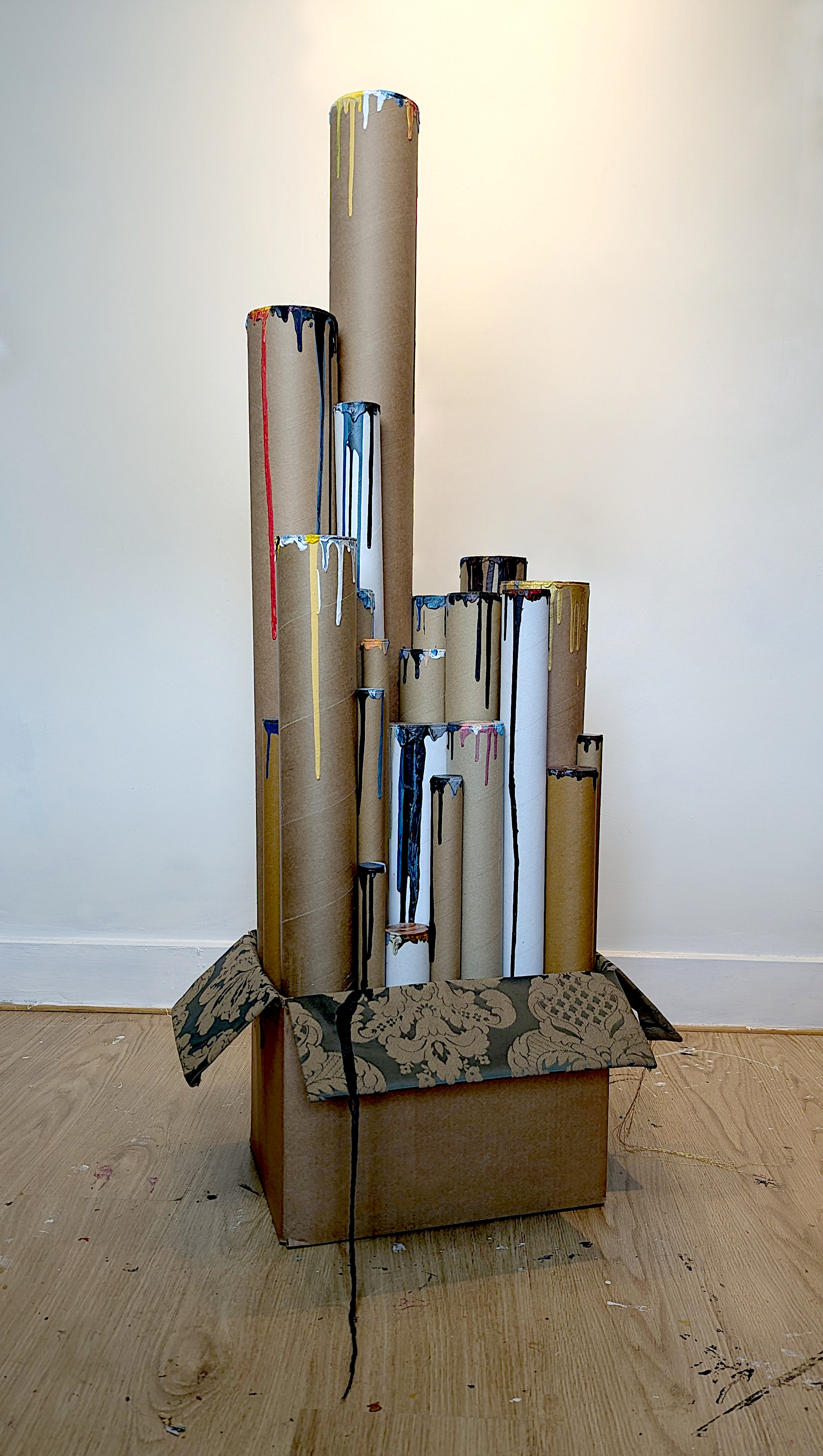
In the first piece, the dominant material is string. And what does string do? It binds, it connects, it fixes, it secures. Here, string represents an attempt to heal the loss, to recreate the painting in the language of repair, mirroring the museum’s use of the green damask towards similar ends. In the second and third pieces, the dominant material is cardboard poster tubes. Which may seem like an unexpected material for Big Serious Art about Big Serious Art, but works within the context of the painting’s lore. For whereas the symbolism of string casts a wide net, the poster tubes are a laser-focused metaphor for the loss and assumed destruction of this one specific painting. A painting which in 1997 was supposedly shown to an investigative reporter, who claimed it was being stored rolled up in a large cardboard tube.
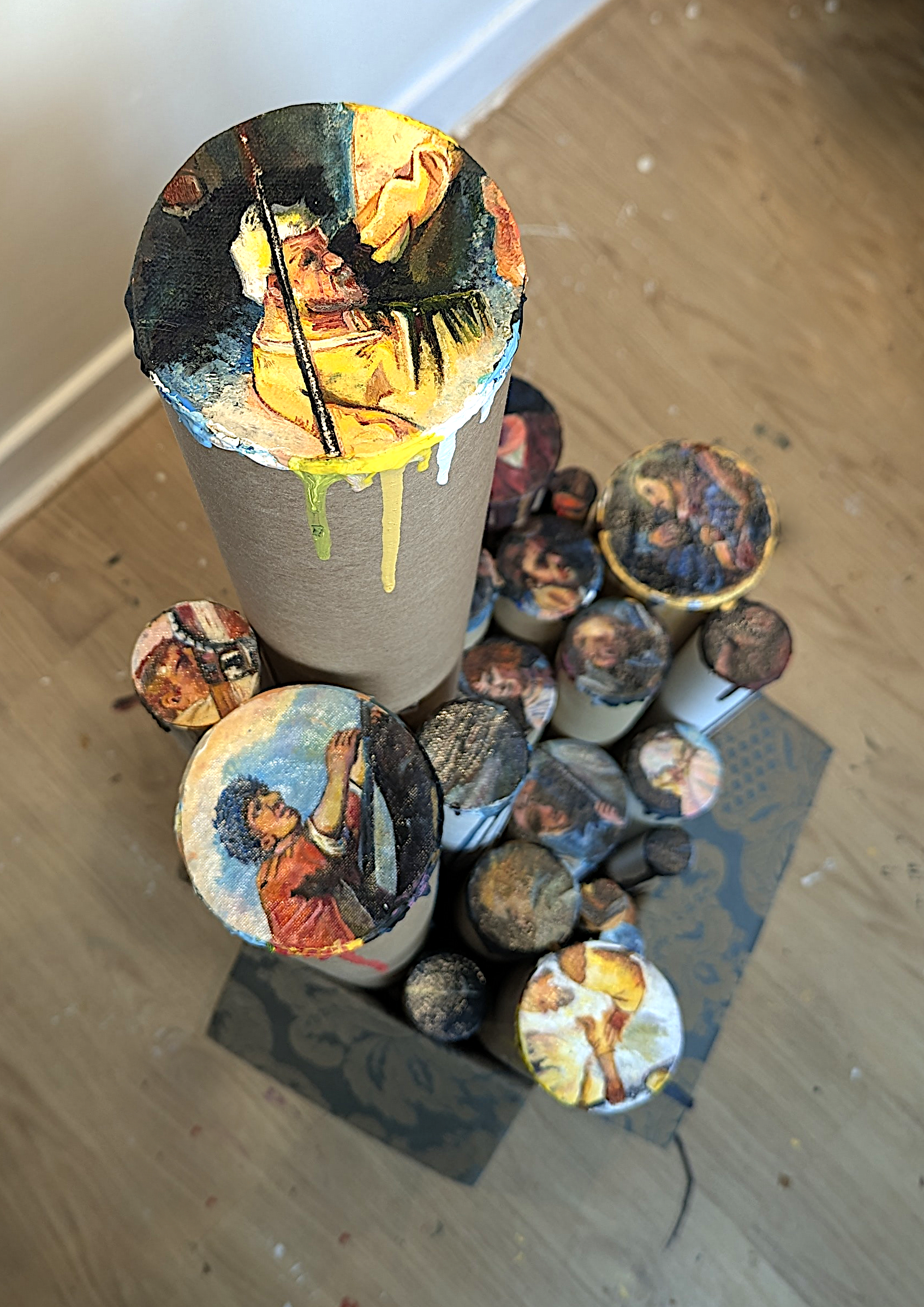
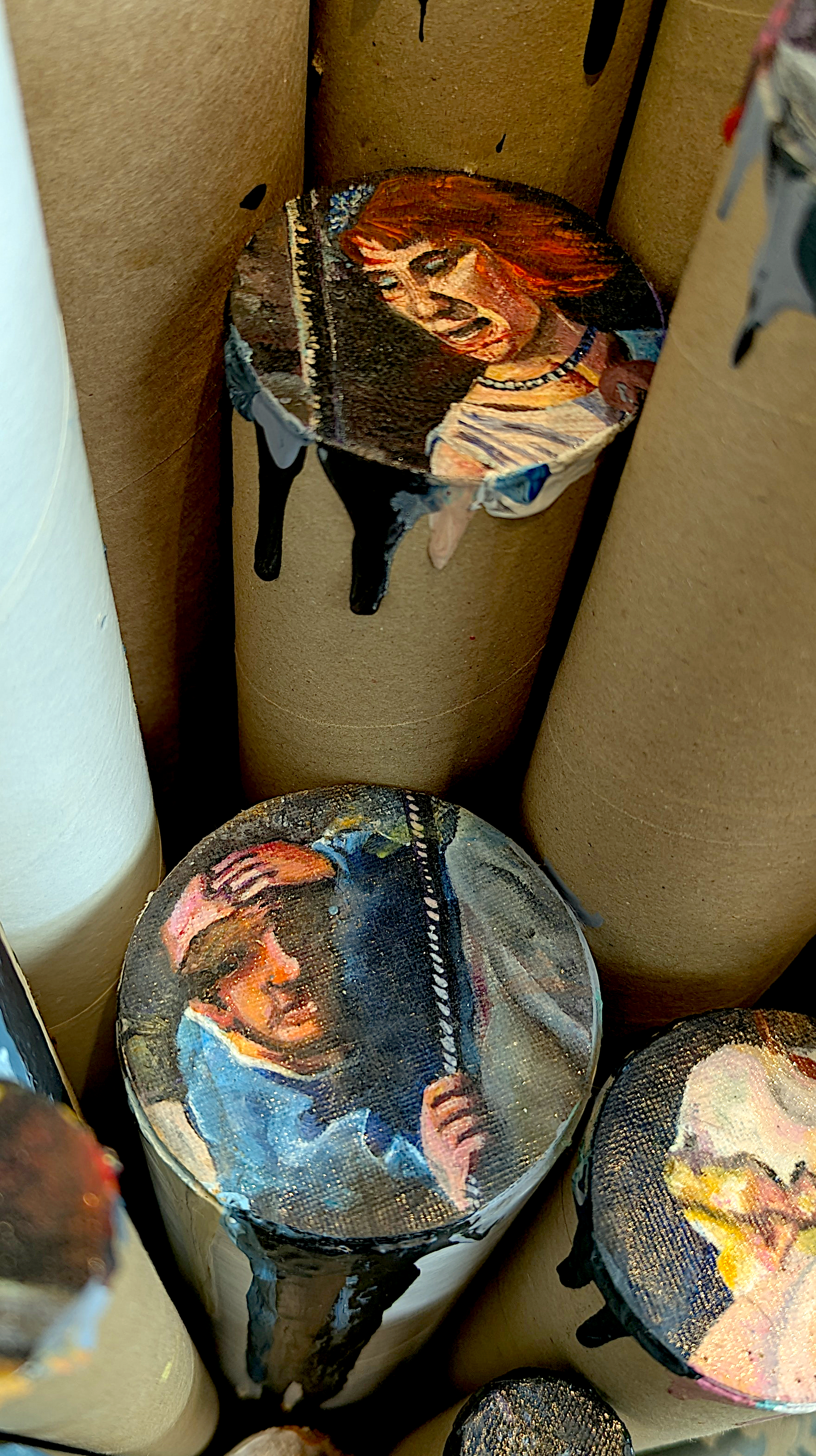
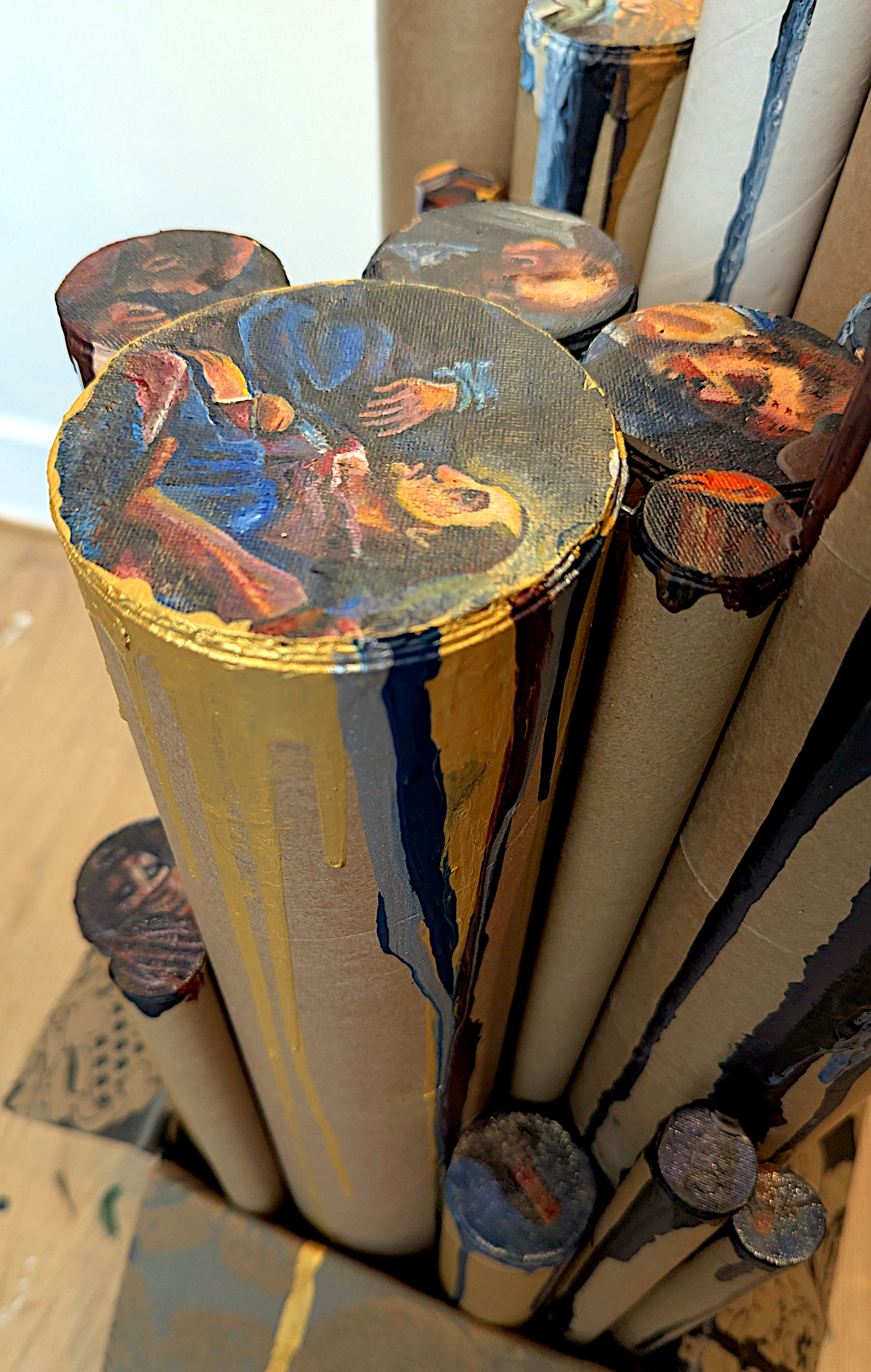
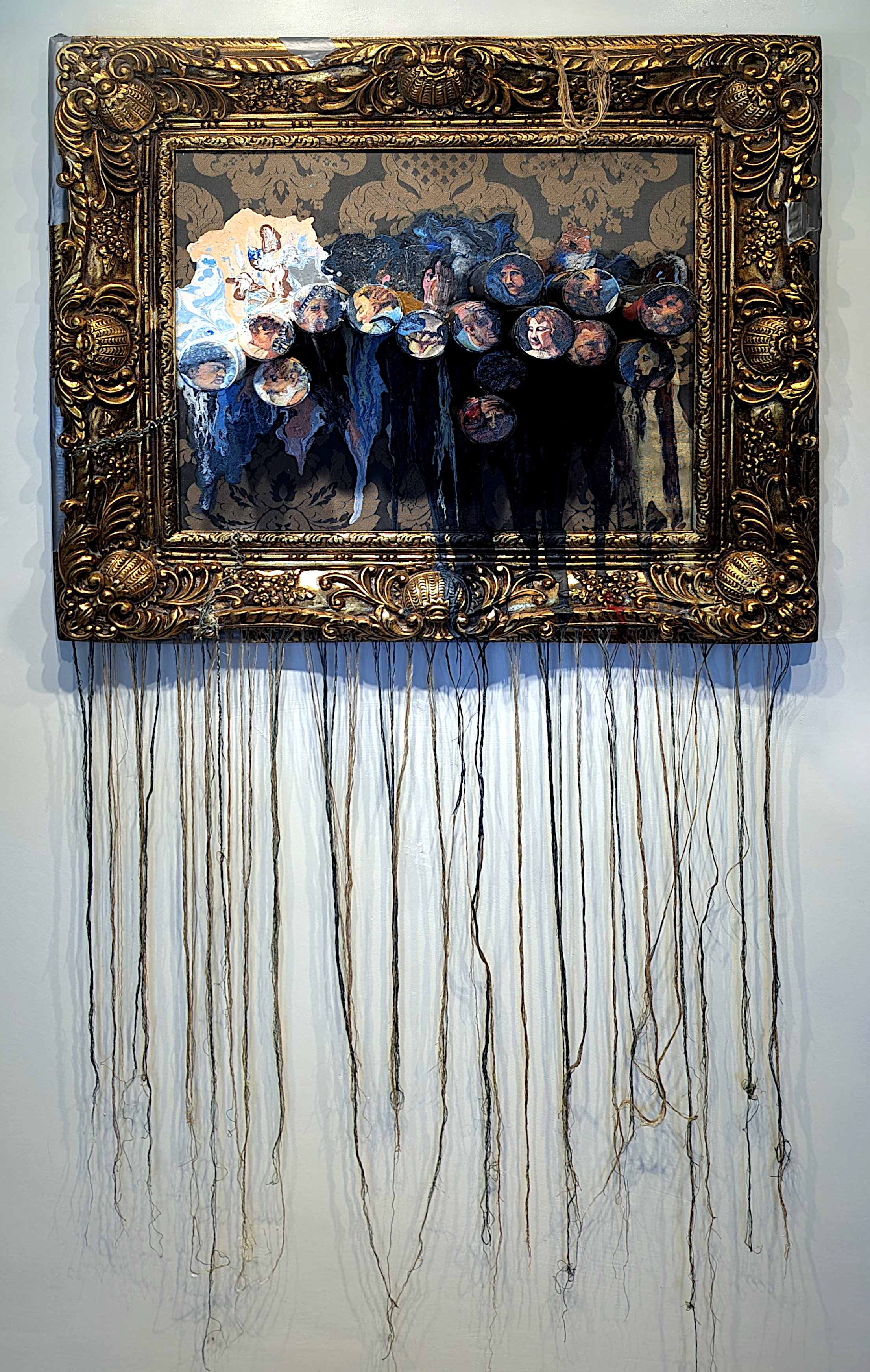
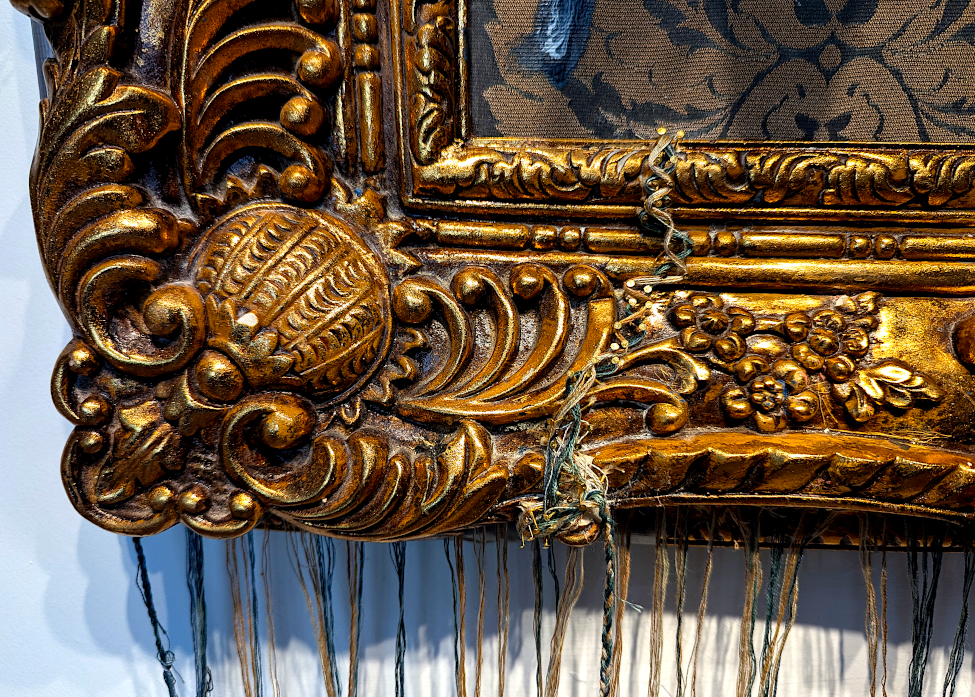
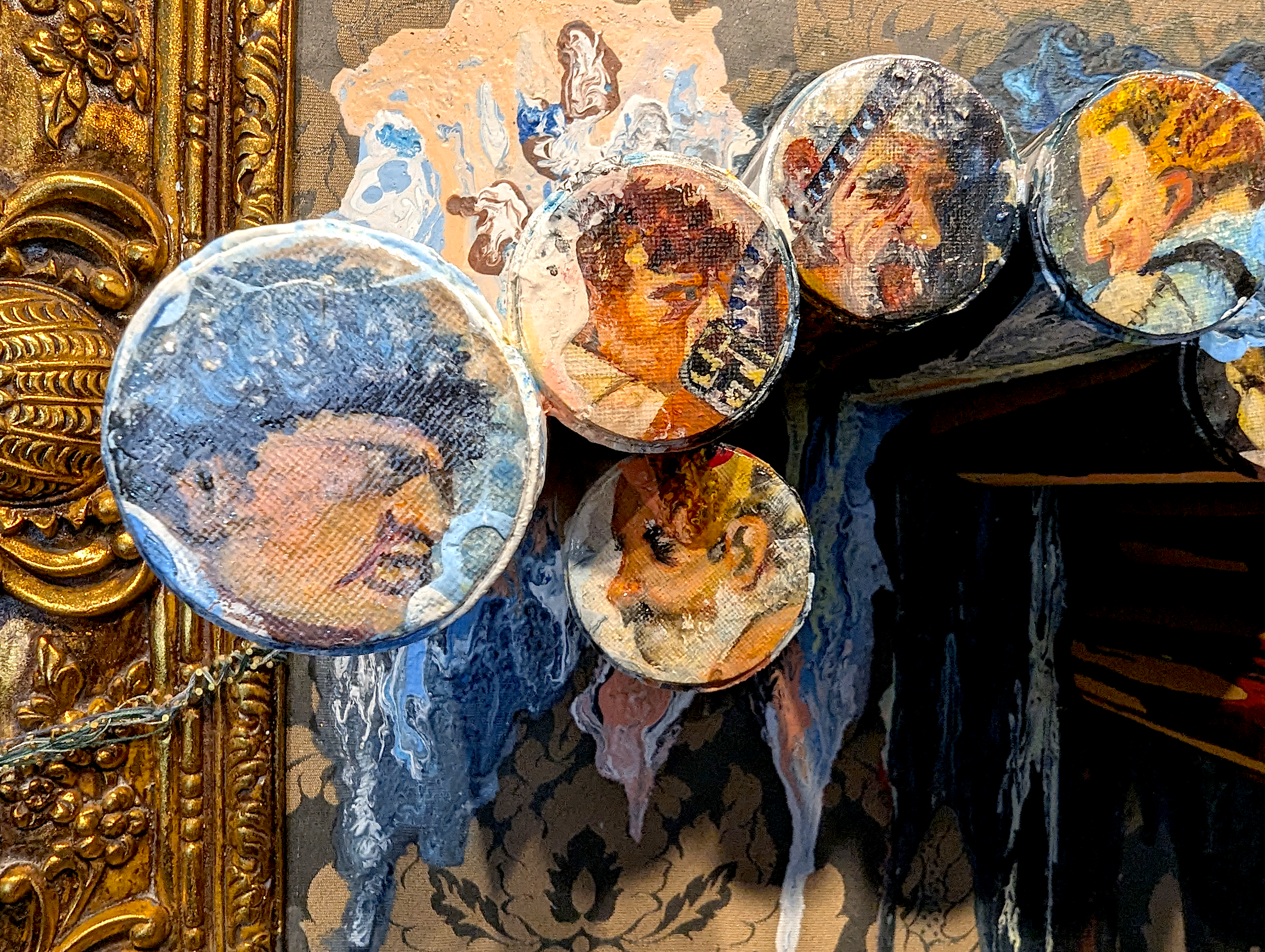
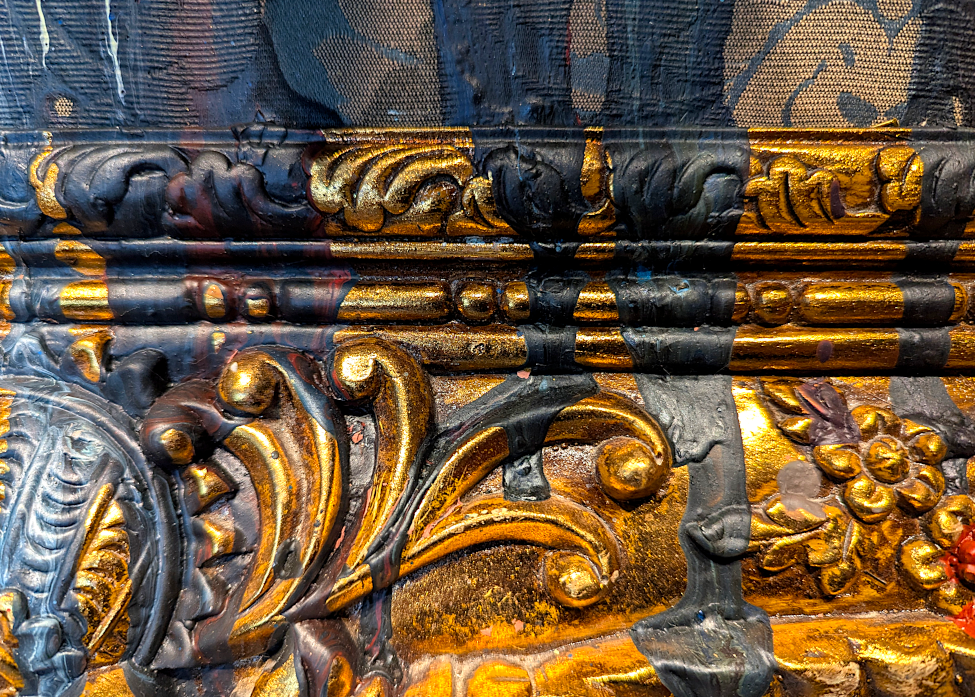
So in the second piece we see the scaffolding of the first piece — the golden frame and the green damask — being rent apart as the fear of loss breaks through and refuses to be quieted. The edge of the damask is shredded and hangs off the frame. Its string, its warp, reduced to loose ends instead of binding ties. The negative space embroidery that is central to the first piece is replaced by a series of paintings on cardboard tubes which erupt from the damask like an intrusive thought. Like the frayed edge of the damask, these paintings are also disintegrating and losing their form. They “melt” down the tubes, which fail at their raison d'être to contain, to protect, to hold safe. Unrestrained, the paint spreads over the damask, the frame, the string in ruinous rivulets.
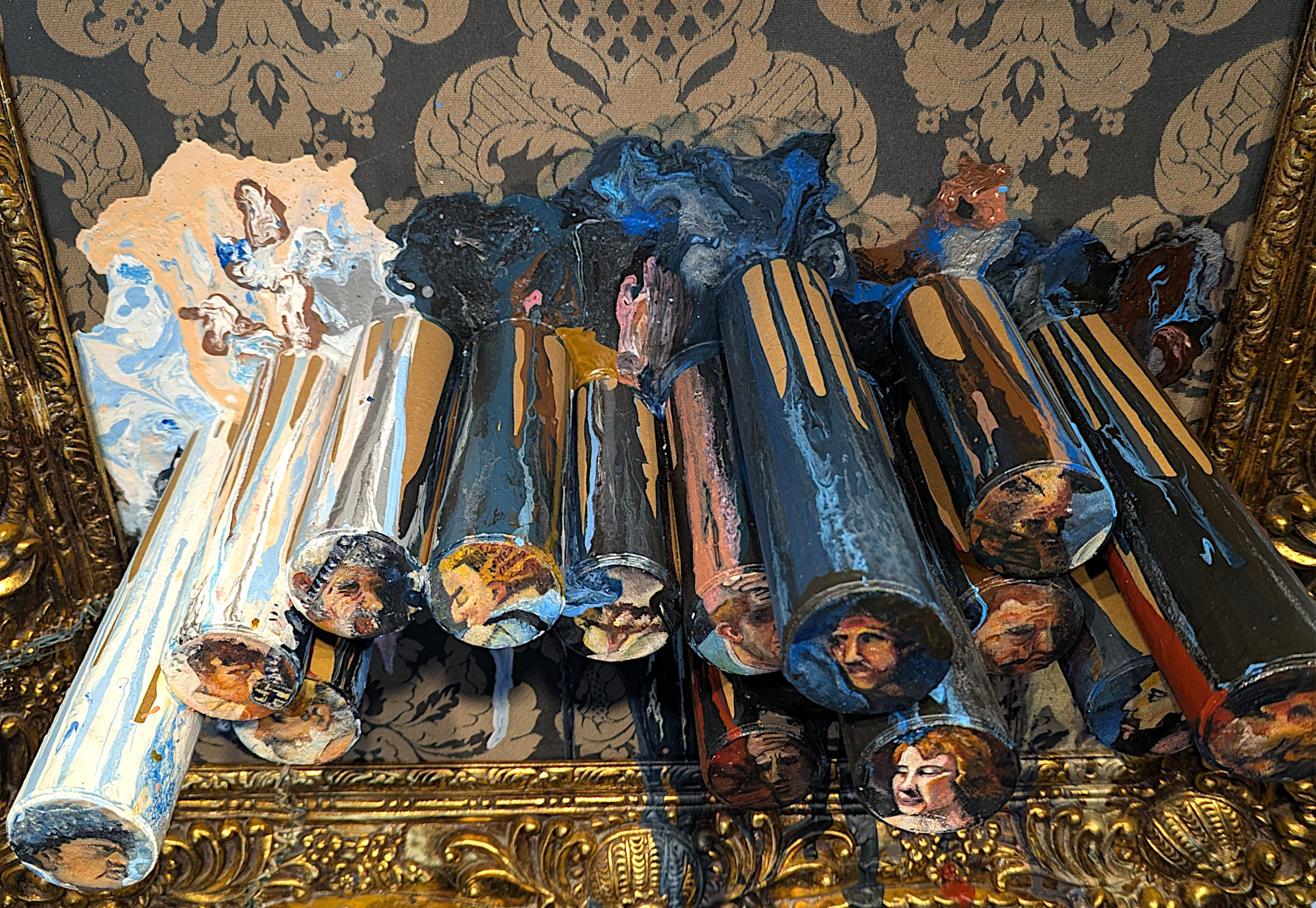
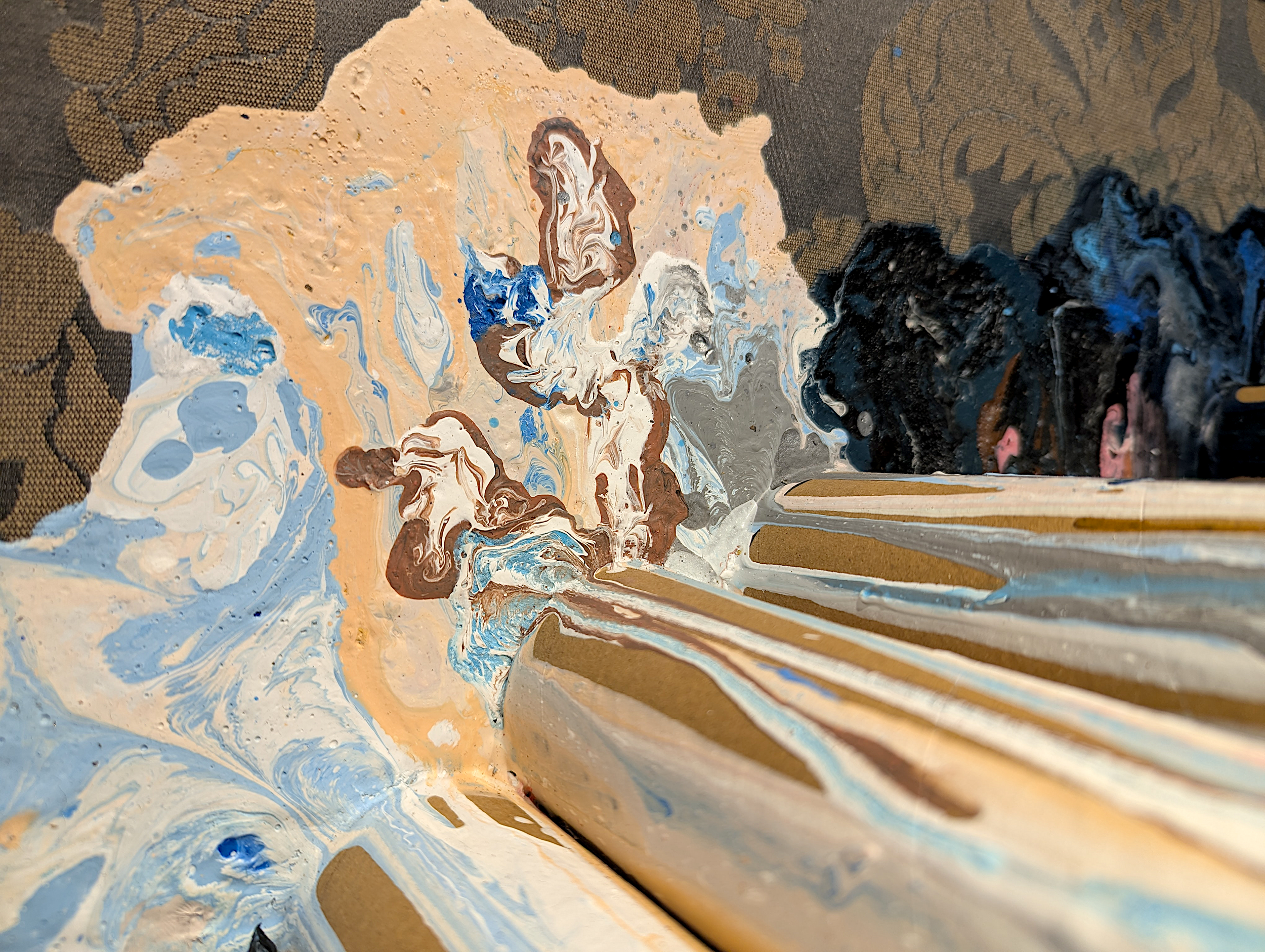
In the third piece, the yielding to grief is all-consuming. The scaffolding of the first and second pieces is all but gone, reduced to a green damask lining on a plain cardboard storage box. Removed from the wall, the piece is removed from the legible world of paintings. Of Rembrandts. With the subject matter even further abstracted, further fractured, across an event greater number of tubes, it presents a vignette reminiscent of the storage locker or attic where the original The Storm On The Sea of Galilee is likely being held. This is a forgotten thing, a lost thing. A thing which has been divorced from the form and function of painting and shoved into the quiet, dusty margins.
And in both these pieces, a stowaway can be seen amongst the tubes. Just as Rembrandt painted his own self-insert into The Storm On The Sea Of Galilee, so I have painted myself into these paintings as well. I/she watches Rembrandt watch the viewer. Watches him implicate that very viewer in the shared fate of the boat/world; in the fate of the lost painting. I/she looks to him, to art history, for guidance and help processing the loss of the original work.